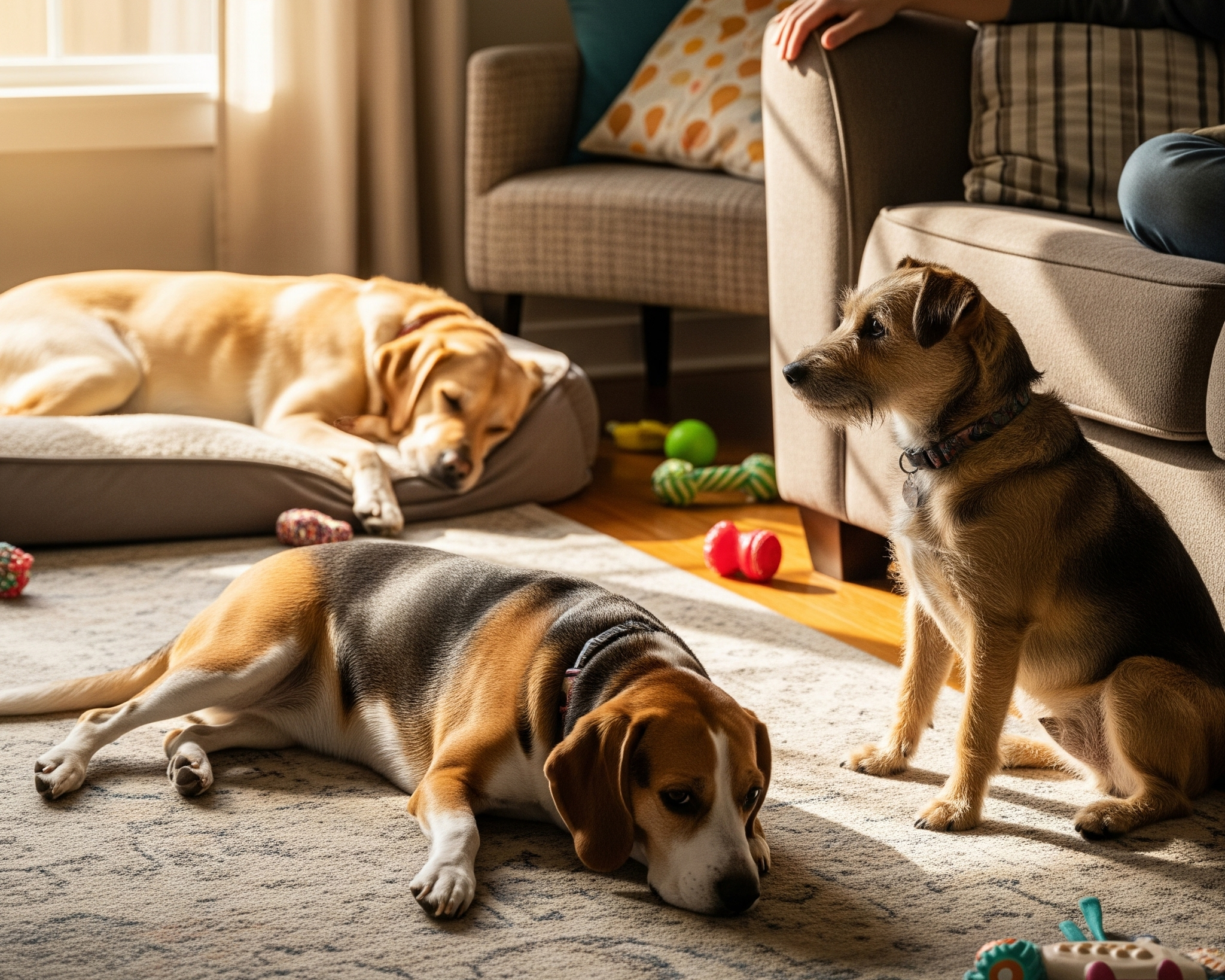
Life with more than one dog unfolds in layers, and each layer reveals a new aspect of their relationships. The moment a second dog steps into the house, the atmosphere shifts. Energy patterns change, routines stretch, and personalities that once seemed simple suddenly show depth. I noticed quickly that the house no longer revolved around a single temperament but became a living ecosystem shaped by multiple canine perspectives.
Each dog brings a distinct rhythm into the household. One may prefer quiet corners and long naps, while another thrives on constant movement and play. Their coexistence requires adjustments not only from them but from me as well. Meals, walks, rest time, and affection must be distributed in a way that feels fair, even if fairness looks different to each individual dog.
Over time, I realized that harmony is not automatic. It forms gradually through observation, guidance, and consistent structure. Dogs communicate constantly, and once I paid closer attention to their body language, I could see how they negotiated space and status in subtle ways. That awareness transformed how I managed the home.
Establishing Structure Without Rigidity
Structure forms the backbone of any multi-dog household. Dogs feel more secure when they know what to expect, and predictability reduces tension. Feeding schedules, designated sleeping spots, and consistent walk times provide a framework that keeps competition from escalating.
Structure does not mean strictness without flexibility. I have found that adapting to small changes prevents frustration from building. If one dog needs extra exercise while another prefers shorter walks, I adjust accordingly rather than forcing identical routines. Balanced management honors individuality while preserving order.
Clear boundaries also help prevent misunderstandings between dogs. I supervise high-value situations like feeding and treat time closely. Over time, those structured moments become predictable rituals, and the dogs settle into them calmly. Consistency builds trust not just between me and the dogs, but among the dogs themselves.
Navigating Hierarchies And Social Roles
Dogs naturally sort out social roles, though not always in dramatic or aggressive ways. In my experience, hierarchy often appears through small gestures such as who walks through a doorway first or who claims a favorite resting spot. Observing these interactions taught me that status does not always equal dominance in the way people often assume.
One dog may take the lead outdoors, scanning the environment with confidence, while another steps into a leadership role indoors during play. These roles shift depending on context, and forcing a rigid order can disrupt their organic balance. My role is not to dictate rank but to intervene only when tension escalates.
Respecting their communication allows them to resolve minor disagreements peacefully. A stiff posture, a turned head, or a soft growl can serve as negotiation tools. By resisting the urge to overreact to every minor correction between them, I give them space to develop healthy social skills. Intervention remains important, but timing matters.
Managing Resource Competition
Resources often become the spark for conflict if not handled thoughtfully. Food, toys, resting areas, and even human attention can feel like limited assets from a dog’s perspective. I quickly learned that proactive management prevents unnecessary rivalry.
Feeding dogs separately reduces anxiety around meals. Even dogs that appear friendly can become tense when bowls are placed side by side. Physical distance during feeding fosters calmness and prevents guarding behaviors from forming.
Toys and chews require thoughtful rotation. High-value items are introduced during supervised sessions, and I remove them if excitement intensifies. Equal access does not always mean identical treatment; sometimes one dog needs a different enrichment option to stay content. Attentive management keeps the atmosphere cooperative.
The Emotional Climate Of The Pack
The emotional tone of the household often mirrors my own energy. Dogs are incredibly perceptive, and stress in the environment spreads quickly. On days when I move through routines calmly and confidently, the dogs respond with steadier behavior.
Tension between dogs can escalate if I react with anxiety. I have noticed that breathing slowly, speaking in even tones, and maintaining relaxed body language reduces their reactivity. Emotional regulation becomes a silent but powerful training tool.
Each dog also influences the others emotionally. A nervous dog can raise the collective alertness level, while a relaxed dog can stabilize it. Recognizing these emotional dynamics helps me anticipate moments that require extra supervision or reassurance.
Introducing A New Dog To The Household
Adding a new dog shifts existing dynamics in ways that require patience. Initial introductions benefit from neutral ground, where neither dog feels ownership. Slow exposure builds familiarity without overwhelming anyone.
Back at home, gradual integration works better than immediate immersion. Separate spaces during rest periods give everyone time to decompress. Short, positive interactions build trust incrementally.
The resident dogs may need reassurance that their routines and relationships with me remain intact. Extra one-on-one time prevents jealousy from festering. Transition periods can feel chaotic, but steady guidance eventually transforms uncertainty into cohesion.
Individual Attention Within A Group Setting
Individual relationships remain essential even in a group environment. Each dog deserves time alone with me, whether through a walk, training session, or quiet bonding moment. Those individual connections strengthen trust and reduce competition for affection.
Training sessions become opportunities for mental stimulation and focused interaction. Working one dog at a time sharpens their skills and prevents distraction-driven frustration. The other dogs learn patience while waiting their turn.
Personalized attention also helps me monitor subtle behavioral changes. Appetite shifts, energy dips, or mood fluctuations become easier to detect when I spend focused time with each dog. Early awareness allows for timely adjustments.
Play Styles And Compatibility
Play can either strengthen bonds or expose friction. Dogs have distinct play styles, and compatibility matters. One dog may prefer wrestling, while another favors chase games. Mismatched energy levels sometimes require structured play to prevent overwhelm.
I supervise early play sessions closely. Interrupting before excitement escalates teaches self-control without suppressing fun. Breaks during play allow arousal levels to settle, keeping interactions healthy.
Outdoor environments often amplify play intensity. Wide spaces encourage running and chasing, which can shift the social tone. Monitoring body language during these moments ensures that enthusiasm remains mutual rather than one-sided.
Addressing Conflict Constructively
Disagreements happen even in well-managed households. A growl or snap does not automatically signal a broken relationship. It often serves as communication that a boundary has been crossed.
My response focuses on separating calmly and redirecting attention rather than punishing. Harsh reactions can increase anxiety and worsen future interactions. Instead, I reassess triggers and adjust management strategies.
Repeated conflict over specific resources or spaces signals the need for environmental changes. Moving feeding areas, increasing exercise, or providing additional resting spots can dramatically reduce friction. Solutions often lie in prevention rather than correction.
The Role Of Exercise And Mental Stimulation
Energy outlets shape behavior significantly in multi-dog settings. Dogs with unmet physical or mental needs are more likely to display irritability. Regular exercise diffuses tension and promotes cooperation.
Group walks strengthen pack cohesion. Moving together with a shared purpose fosters alignment and reduces territorial behavior. However, individual walks remain valuable for focused training and varied stimulation.
Mental enrichment, such as puzzle feeders or scent games, channels curiosity productively. Engaged minds are less likely to fixate on competition. Rotating activities keeps novelty alive and boredom at bay.
Health Considerations In Shared Spaces
Health management becomes more complex with multiple dogs. Illness can spread quickly, and subtle symptoms may be overlooked if attention is divided. Regular veterinary care and vaccination schedules become essential pillars of responsible ownership.
I maintain separate feeding bowls and wash them consistently to prevent cross-contamination. Grooming routines also require careful attention, especially if one dog has skin sensitivities or allergies. Hygiene habits protect the entire household.
Weight management can be challenging when appetites differ. Monitoring portion sizes ensures that one dog does not overeat while another eats slowly. Tailored feeding plans prevent resentment and health complications alike.
The Human Factor In Pack Balance
My behavior influences more than I once realized. Favoritism, even if unintentional, can destabilize relationships. Equal affection does not mean identical interaction, but it does require fairness in tone and attention.
Clear communication prevents confusion. Consistent commands and expectations create predictability. If one dog receives mixed signals, the ripple effect can unsettle the group.
Patience remains the most valuable trait I bring into the dynamic. Progress sometimes feels slow, especially during transitional phases. Steady guidance, however, builds long-term stability.
Long-Term Evolution Of Group Relationships
Relationships between dogs evolve over time. Puppies mature, senior dogs slow down, and shifting life stages alter interaction patterns. What worked a year ago may need adjustment today.
I have witnessed bonds deepen through shared experiences. Dogs that once tolerated each other eventually formed close companionships. Growth happens gradually and often quietly.
Aging introduces new considerations. Senior dogs may require more rest and less rough play. Adapting the environment to accommodate these changes preserves harmony.
Finding Joy In The Complexity
Multi-dog life carries challenges, but it also offers profound rewards. Watching them communicate, collaborate, and comfort one another adds richness to daily life. Their companionship extends beyond human interaction.
Moments of synchronized behavior during walks or shared naps create a sense of unity. The home feels fuller, not just physically but emotionally. That fullness reflects the trust cultivated over time.
Balance does not mean perfection. Occasional tension remains part of any social group. What matters is the foundation of respect and structure that supports recovery.
Sustaining Harmony Through Commitment
Long-term success in a multi-dog household rests on commitment. Observation, adaptability, and compassion guide daily decisions. Each dog’s needs remain dynamic rather than fixed.
Routine evaluations help maintain equilibrium. If energy levels shift or new behaviors appear, adjustments follow quickly. Flexibility prevents small issues from becoming entrenched problems.
Living with multiple dogs has reshaped how I view companionship. It demands attentiveness and rewards patience. Within the ebb and flow of their relationships, I have discovered a deeper appreciation for the intricate social world that unfolds right inside my home.
