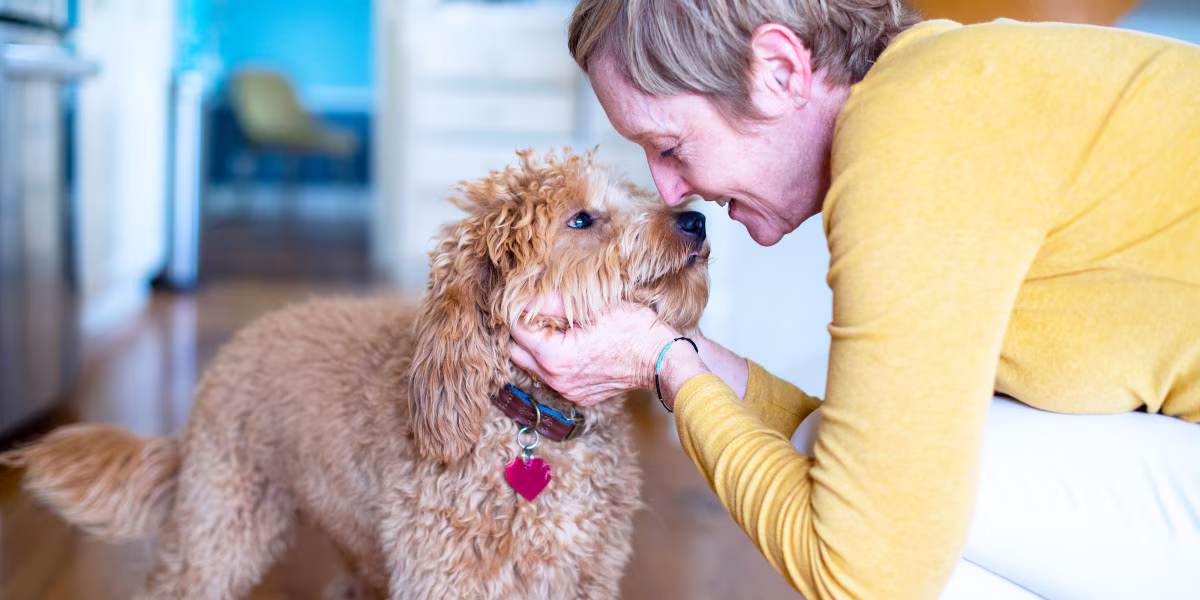
Bringing a dog into my life changed the rhythm of my days in the best possible way. Along with the cuddles and chaos came the responsibility of teaching clear boundaries and useful skills. Clicker training quickly became my favorite method because it felt fair, simple, and surprisingly powerful. Instead of relying on raised voices or frustration, I found a way to communicate with precision and kindness.
Clicker training is not complicated, but it does require consistency and patience. The small plastic clicker makes a sharp, distinct sound that marks the exact moment a dog does something right. That tiny sound bridges the gap between behavior and reward, helping dogs understand what earned the treat. For first-time paw parents, this clarity can make the entire training journey less overwhelming.
In this guide, I will walk through what clicker training is, how it works, how I started with my own dog, and how you can confidently use it at home. By the end, you will see how this simple tool can strengthen communication and deepen trust between you and your pup.
What Clicker Training Really Means
Clicker training is based on positive reinforcement. Instead of punishing unwanted behavior, I focus on rewarding behaviors I want to see more often. The click sound acts as a marker that tells my dog, “Yes, that right there is exactly what I wanted.” The reward follows immediately after the click.
The beauty of the click is its consistency. My tone of voice can change depending on my mood, but the click always sounds the same. Dogs notice that consistency and respond to it quickly. Over time, the click becomes a promise that a reward is coming.
This method relies on timing. I have to click at the exact moment the correct behavior happens. If my dog sits, I click the instant her bottom touches the floor, not three seconds later. That precision is what makes clicker training so effective.
Why I Chose Clicker Training For My Dog
Raising a puppy came with plenty of advice from friends, family, and online forums. Some methods sounded harsh, and others seemed confusing. Clicker training stood out because it focused on rewarding good behavior rather than correcting mistakes. That approach aligned with how I wanted my relationship with my dog to feel.
I noticed early on that my dog was eager to please but easily distracted. The clicker helped cut through the noise of the environment. Even in a busy park, that sharp sound grabbed her attention instantly. It created a clear communication system between us.
Another reason I stuck with clicker training was how quickly I saw results. Simple behaviors like sit and eye contact came together faster than I expected. Each small success built my confidence as a new paw parent.
How The Clicker Works In A Dog’s Mind
Dogs learn through associations. When the click is consistently followed by a treat, it becomes meaningful. In behavioral terms, the click turns into a conditioned reinforcer, which simply means it predicts something good.
At first, the click itself has no meaning. After several repetitions of click then treat, my dog begins to light up at the sound. Her ears perk up, and she looks at me in anticipation. That reaction shows that the click has become valuable.
The key is pairing the click and treat closely together in time. If I delay the reward too long, the connection weakens. Clear timing strengthens the mental link and speeds up learning.
Charging The Clicker The Right Way
Before teaching any commands, I had to introduce the clicker properly. This step is often called charging the clicker. It simply means teaching my dog that click equals treat.
I started in a quiet room with no distractions. I clicked once and immediately gave her a small treat. I repeated this process about 15 to 20 times in short bursts. There was no command or expectation, just click and reward.
After a few sessions, I noticed a shift. The moment she heard the click, she looked at me with excitement. That response told me she understood that the sound predicted something good.
Teaching The First Basic Commands
With the clicker charged, I moved on to simple behaviors. Sit was my starting point because it naturally happens often. I waited until she sat on her own, clicked the exact moment she did, and rewarded her.
After several repetitions, she began offering the behavior more frequently. Only then did I start adding the verbal cue “sit” right before I expected the action. This pairing helped her connect the word with the movement.
The same process worked for down, stay, and even eye contact. I broke each behavior into small steps and rewarded progress. Instead of demanding perfection, I celebrated improvement.
Timing And Consistency Matter More Than Perfection
One of the biggest lessons I learned was that my timing shaped the outcome. Clicking too early or too late confused my dog. Paying close attention to the exact moment of success made all the difference.
Consistency also played a major role. I made sure every click was followed by a reward, especially in the early stages. Skipping rewards too soon can weaken the trust in the system.
Short training sessions worked better than long ones. Five to ten minutes a few times a day kept both of us engaged. Ending on a positive note helped maintain enthusiasm.
Common Mistakes First-Time Paw Parents Make
Many new dog owners accidentally click more than once for a single behavior. Multiple clicks can muddy the message. I had to remind myself that one correct action equals one clear click.
Another common mistake is using the clicker to get attention. The click is not meant to call the dog over. It marks behavior that has already happened, not something I am asking for in that moment.
Moving too fast can also create frustration. If I raise the criteria too quickly, my dog may become confused. Gradual progression builds confidence and keeps training enjoyable.
Using Clicker Training For Problem Behaviors
Clicker training is not limited to teaching tricks. I used it to address jumping, leash pulling, and excessive barking. Instead of punishing those behaviors, I looked for alternative actions to reward.
For jumping, I clicked and rewarded four paws on the floor. Over time, she learned that calm greetings earned attention. The unwanted behavior faded because it no longer paid off.
Leash walking improved when I clicked for a loose leash and eye contact. Each small success added up. Replacing frustration with clear communication changed our daily walks completely.
Building A Stronger Bond Through Positive Reinforcement
Training sessions became moments of connection rather than correction. My dog started watching me more closely, waiting for guidance. That attention spilled into other parts of our routine.
Trust grew as she realized I would not yell or punish mistakes. Instead, I guided her toward success. The clicker created a predictable pattern that felt safe and encouraging.
Over time, training felt less like a task and more like a shared activity. Celebrating small wins strengthened our relationship in ways I did not expect.
When To Fade The Clicker
The clicker does not need to stay in your hand forever. Once a behavior becomes reliable, I gradually reduced the frequency of clicking. Verbal praise and occasional treats began to replace the constant rewards.
I never removed rewards abruptly. Gradual fading helped maintain motivation. Random reinforcement kept behaviors strong without creating dependency.
Even now, I bring the clicker back when teaching something new. It remains one of the clearest communication tools I have.
Tips For Staying Motivated As A New Paw Parent
Progress is not always linear. Some days feel smooth, while others test patience. I remind myself that setbacks are part of the process.
Setting small, realistic goals keeps training manageable. Instead of expecting perfect recall immediately, I focus on improving response time step by step. Each small improvement counts.
Celebrating effort matters just as much as celebrating success. My dog responds best when training feels like a game rather than a chore. That mindset shift makes consistency easier.
Is Clicker Training Right For Every Dog
Most dogs respond well to positive reinforcement. High-energy breeds, shy rescues, and even older dogs can benefit from the clarity a clicker provides. The method is adaptable to different personalities and learning speeds.
Food-motivated dogs often pick it up quickly. For dogs less interested in treats, I experimented with toys or praise as rewards. Finding what truly motivates your dog makes the process smoother.
Patience remains essential regardless of breed or age. Clicker training does not promise overnight miracles, but it does offer a respectful and effective path forward.
Final Thoughts On Starting Strong
Clicker training gave me confidence during a time filled with questions and second-guessing. It offered structure without harshness and progress without fear. That balance made all the difference in my journey as a first-time paw parent.
Clear communication builds trust, and trust builds lasting habits. The small click that once felt insignificant became a powerful bridge between us. With practice, consistency, and a pocket full of treats, anyone can create that same connection.
Starting with a clicker may feel simple, but its impact reaches far beyond basic commands. It shapes the way we guide, encourage, and support our dogs every single day.
