Dogs have a way of turning a quiet home into a whirlwind of noise, motion, and chewed-up shoes. I have lived through the zoomies at midnight, the barking at invisible threats, and the tug-of-war matches over socks that were never meant to be toys. That kind of chaos can feel overwhelming, especially if you imagined peaceful walks and a well-mannered companion curled up at your feet. Basic obedience became the bridge between frustration and harmony in my home, and the transformation did not happen overnight, but it did happen.
Training a dog is not about control in the harsh sense of the word. It is about communication, structure, and trust. Once I shifted my perspective from “How do I stop this behavior?” to “How do I guide my dog toward better behavior?” everything began to change. The journey from chaos to calm is less about forcing compliance and more about building a language you both understand.
Why Basic Obedience Matters More Than You Think
Basic obedience lays the foundation for everything else you want to do with your dog. Without it, simple activities like greeting guests or walking through a park can turn into stressful events. With it, those same situations become opportunities for connection and confidence.
Commands like sit, stay, come, and leave it are not party tricks. They are safety tools that can protect your dog from real danger. A reliable recall can stop your dog from running into traffic, and a solid stay can prevent a door-dashing incident. I began to see obedience as an act of care rather than a set of rigid rules.
Beyond safety, obedience strengthens your bond. Each successful cue reinforces the idea that you and your dog are a team. The more consistent I became, the more my dog looked to me for direction instead of reacting impulsively to every distraction.
Setting The Tone From Day One
Dogs thrive on clarity. Mixed signals create confusion, and confusion often looks like stubbornness. I learned quickly that if I allowed jumping one day and scolded it the next, I was the one creating the problem.
From the start, I established simple house rules. If jumping on furniture was off-limits, it was always off-limits. If meals were served at certain times, I stuck to that schedule. Structure gave my dog a sense of predictability, which naturally reduced anxiety-driven behaviors.
Consistency extended to my tone of voice and body language. A calm, steady presence worked far better than shouting or frantic gestures. Dogs are experts at reading energy, and my composure often determined how quickly a situation settled.
Mastering Sit As The First Building Block
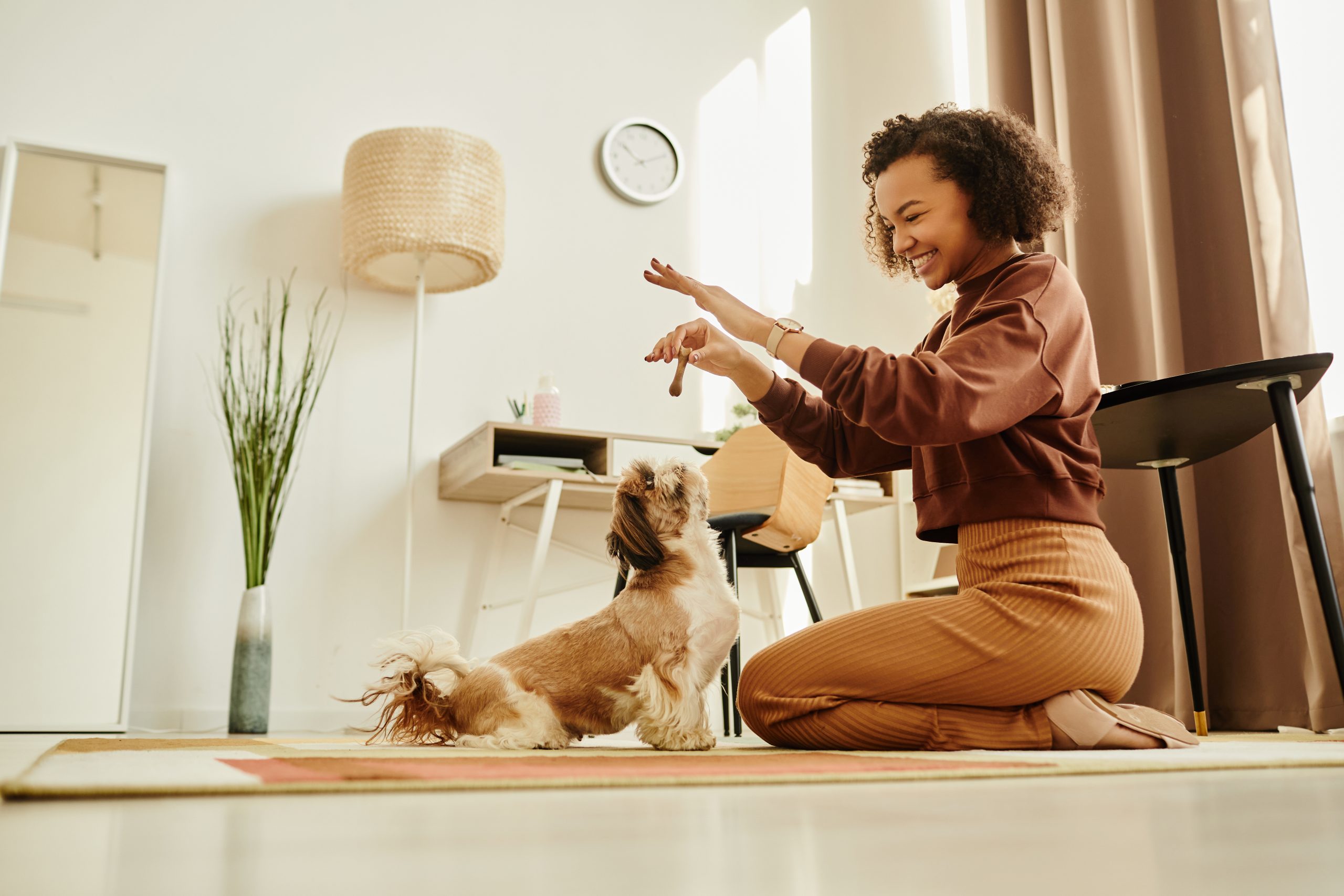
Sit was the first command I taught with intention, and it became the gateway to everything else. It is simple, practical, and easy to reinforce throughout the day. Before meals, before walks, before opening the door, I asked for a sit.
I started by holding a treat just above my dog’s nose and slowly moving it back. As the head tilted upward, the bottom naturally lowered to the floor. The moment that happened, I marked the behavior with praise and gave the reward.
Repetition turned that motion into a reliable response. Over time, I phased out the treat lure and relied more on the verbal cue and hand signal. Sit became a default behavior, a way for my dog to pause and focus instead of reacting impulsively.
Building A Reliable Stay
Stay tested both of us in the beginning. My dog could sit beautifully, but remaining in place while I stepped away was another story. The urge to follow was strong, and breaking position happened often.
I began with very small steps. I asked for a sit, said stay, and took one step back. If my dog held position for even a second, I returned and rewarded. Gradually, I increased distance and duration, making sure not to push too far too fast.
Patience paid off. Short, successful sessions built confidence, while long, frustrating ones only led to setbacks. Now, stay allows me to open doors, carry groceries, and navigate busy environments without chaos erupting around me.
Teaching Come With Confidence
Recall is one of the most important skills any dog can have. A strong come command can prevent accidents and give your dog more freedom safely. I treated this cue with special care because I never wanted it to feel optional.
I practiced in low-distraction environments first. Calling my dog in a quiet room and rewarding generously created positive associations. I made sure that come never led directly to something unpleasant, like nail trimming or the end of fun, at least in the early stages.
As reliability improved, I introduced mild distractions. A toy on the floor or a family member walking by added challenge without overwhelming the process. Gradual progression built a recall that worked even in stimulating environments, and that reliability brought immense peace of mind.
Leash Manners That Transform Walks
Few things test patience like a dog that pulls relentlessly on the leash. Walks should feel enjoyable, not like a strength-training session. I realized that pulling was self-rewarding for my dog because it led to forward motion.
Each time the leash tightened, I stopped walking. Movement resumed only when the leash loosened. At first, this meant slow progress down the sidewalk, but the message became clear over time.
I also rewarded walking beside me with praise and occasional treats. The combination of stopping for pulling and rewarding loose-leash walking gradually reshaped the habit. Walks shifted from chaotic drags to calm strolls, and both of us began to look forward to them.
Managing Distractions Without Losing Control
Real life is full of distractions. Other dogs, squirrels, loud trucks, and curious strangers can derail even a well-trained pup. Preparing for these moments required deliberate practice.
I exposed my dog to distractions in controlled ways. Instead of heading straight to the busiest park, I started in quieter areas and slowly increased the level of stimulation. Success in mild settings built the confidence needed for more challenging ones.
Redirection became a powerful tool. If my dog fixated on something, I asked for a known cue like sit or look at me. Giving an alternative task helped break the cycle of overstimulation and reinforced the habit of checking in with me.
Addressing Problem Behaviors Calmly
Barking at the door, chewing furniture, and jumping on guests can feel personal, but they are usually expressions of unmet needs or unclear expectations. I stopped viewing these behaviors as acts of defiance and started analyzing their triggers.
If barking erupted every time the doorbell rang, I practiced simulated doorbell sounds paired with a sit command and reward. If chewing targeted furniture, I ensured appropriate chew toys were available and praised their use. Redirecting energy proved far more effective than scolding.
Staying calm was essential. Raising my voice escalated the situation and added stress. A measured response maintained authority without creating fear, and that balance encouraged faster progress.
The Role Of Routine In Creating Calm
Routine shapes behavior more than occasional training sessions ever could. Feeding, walking, playtime, and rest happening at predictable times reduced restlessness significantly. My dog learned what to expect, and that predictability translated into steadier behavior.
Mental stimulation also became part of the daily rhythm. Puzzle toys, short training refreshers, and scent games channeled energy productively. A mentally engaged dog is far less likely to invent destructive entertainment.
Rest mattered just as much as activity. Ensuring adequate downtime prevented overstimulation. A well-balanced routine created a natural rhythm that supported obedience without constant correction.
Strengthening Trust Through Positive Reinforcement
Rewards accelerate progress and deepen trust. Treats, praise, toys, and affection all function as reinforcements, depending on what motivates your dog most. Discovering what truly excited my dog made training far more effective.
Timing proved critical. The reward had to follow the desired behavior immediately so the connection remained clear. Delayed praise often led to confusion, while prompt reinforcement strengthened learning.
Gradually, I reduced reliance on treats while maintaining verbal praise. The goal was responsiveness rooted in trust, not constant food expectation. That transition happened smoothly because the foundation had been built carefully.
Navigating Setbacks Without Frustration
Progress is rarely linear. Some days felt like breakthroughs, while others felt like starting from scratch. Accepting that setbacks are part of the process kept me from giving up.
If a command faltered, I revisited easier steps rather than pushing harder. Simplifying the task restored confidence for both of us. Short, focused sessions prevented burnout and preserved enthusiasm.
Celebrating small wins made a difference. A calmer greeting at the door or a shorter pulling episode on a walk signaled growth. Recognizing these improvements kept motivation strong.
From Daily Practice To Lasting Change
Obedience is not a one-time project. It is woven into everyday life. Asking for a sit before tossing a toy or practicing recall during play sessions keeps skills sharp.
Consistency over weeks and months reshaped my dog’s habits permanently. What once required deliberate effort gradually became second nature. The transformation was subtle at times, but undeniable in its impact.
Calm replaced chaos not because my dog changed personality, but because we built better communication. The wild energy remained, but it was guided rather than explosive.
The Emotional Shift Behind The Training
Perhaps the most meaningful transformation happened within me. Frustration gave way to patience, and impatience softened into empathy. I began to see my dog’s behavior as information rather than irritation.
Training sessions became moments of connection rather than correction. Eye contact during a successful recall or a steady stay in a busy setting felt like shared victories. That emotional shift strengthened our relationship far beyond obedience itself.
The calmer my energy became, the calmer my dog responded. Mutual trust replaced tension. That harmony extended into daily routines, making our home feel more peaceful and balanced.
Living With A Well-Mannered Companion
A well-trained dog is not robotic or dull. Personality shines even brighter when balanced with self-control. Playfulness feels more enjoyable when it does not spiral into chaos.
Guests can visit without being knocked over. Walks become conversations rather than tug-of-war matches. Quiet evenings feel genuinely restful instead of interrupted by constant correction.
The journey required time, effort, and persistence. Yet the reward has been immeasurable. Moving from chaos to calm transformed not only my dog’s behavior but also my experience as a dog owner.
Basic obedience is a gift you give both yourself and your dog. It fosters safety, strengthens trust, and builds a partnership rooted in respect. With patience and consistency, the whirlwind can settle into a steady, joyful rhythm that makes every day together more fulfilling.
